https://www.fcd-us.org/stepping-into-power-how-student-walkouts-are-safeguarding-communities-and-public-education/
I organized my first school walkout in seventh grade. At the time, I didn’t have the language for organizing — but I understood something clearly: nobody could force all of us to do something against our will.

At that time, our school principal had just been replaced by a white administrator who quickly implemented racist practices that felt like direct attacks on a largely Mexican American school community. Policies shifted toward control and conformity. Dress codes cracked down on culture and individuality. Silence and obedience were publicly rewarded. Even the walk to lunch became an exercise in order and discipline, with students expected to move silently in straight lines “like soldiers” instead of using that time to talk, laugh, and be kids.
The final straw was requiring the entire school to gather outside in 105°F Arizona heat to recite the Pledge of Allegiance as a school. This wasn’t about patriotism — it never was. It was about the new white administrator asserting dominance over a Mexican American student body. The pledge was the instrument; control was the point. Forcing brown children to perform national loyalty on command, in the desert heat, was a power move dressed up as civic ritual. And I remember thinking: they can’t actually make all of us do this.
There weren’t enough teachers to compel hundreds of students into compliance. Once I said that out loud to my friends, something shifted. It was like a light turned on. We started doing the math — one teacher for dozens of students — and realized that if enough of us refused, they couldn’t control us. That realization changed everything.
At that moment, as we all stood amidst the sweltering heat, half the school refused to comply. Our principal was furious but did not know how to respond. The next day, we escalated by refusing to take part at all. Instead a group of us walked back to class. Teachers chastised us to come back — to fall back in line — but we kept walking, and with each step, more students joined us.
That first walkout wasn’t just about one issue. It was an explosion of that realization — that we had autonomy, that we could act, and that we didn’t need permission to do so. Once we felt that, nothing was ever the same again. What became clear was this: there had to be enough of us to keep each other safe. And there were.
Not a Moment, A Movement
History is rife with powerful examples of this. In 1951, Barbara Johns led fellow students in a strike protesting subpar school conditions, which helped set the stage for the landmark Brown v. Board of Education ruling that legally outlawed segregated schools nationwide. In the East LA Blowouts of 1968, 20,000 Chicano students walked out to demand improved school conditions as well as staffing and curricula that reflected their communities. In 2018, the first March for Our Lives protests saw hundreds of thousands walk out to demand comprehensive gun control legislation, investments in public health, and safe schools for all. And today, students continue to rise in defense of their people, their safety, and their basic human rights.
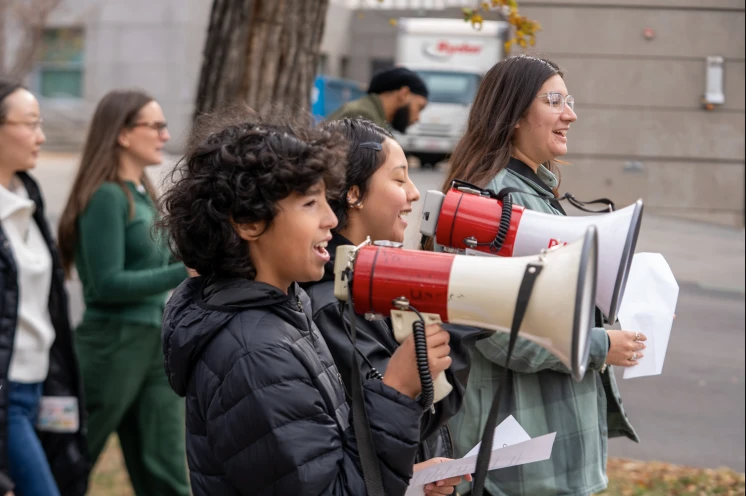
Earlier this year, tens of thousands of students across the United States organized walkouts in response to extreme immigration enforcement and the fear federal agents brought to schools and communities. This comes as young people bear witness to escalating threats against immigrant families, widespread budget cuts to public institutions, attacks on ethnic studies and inclusive curricula, erosion of schools’ sanctuary status, and the criminalization of student dissent. These have created conditions where young people feel they have no choice but to act. They understand that the forces affecting them are the same ones affecting their friends, neighbors, and family members. And they are clear that community organizing — past and present — is rarely sanctioned by systems of power. Youth are leading not from a place of permission, but from one of informed analysis, community care, and staunch moral clarity. They are taking a stand, as generations of young leaders have before them.
Changing Conditions, Creating Change
These intentional acts of protest root in a grassroots organizing ethos that does not await amenable conditions for change, but instead creates them. These conditions can and have led to concrete policy change, but they also have a far broader power-building impact. These acts of solidarity make issues visible and shift public narratives in ways that change how people understand our world, the issues we face, and the possibilities we can embrace. These moments are also particularly impactful for activating new youth organizers and leaders — young people who may never have seen themselves as political actors until the moment they stepped out of their schools and into solidarity together.
Student walkouts are not endpoints — they are entry points. For many young people, they mark the beginning of deeper political education, sustained organizing, and a lived experience of their own collective power. A walkout can be the moment a student evolves from someone surviving injustice into someone transforming it. The extent to which students are supported, trained, mentored, and connected both through and beyond their organizing will determine not just the trajectory of this moment, but the movements taking shape inside each of them.
The Playbook of Control
As students are stepping into their power, many are being met with heightened scrutiny and threats of disciplinary action from school administrators and law enforcement officers who cite disruptions to school operations, school engagement, and student safety. This is nothing new to school communities. Harsh discipline operating under the guise of school safety reflects a long-standing playbook that relies on policing, surveillance, and punishment to manage the predictable outcomes of decades of underinvestment.
In the case of Los Angeles, one student from a high school in the Eastside recounted, “At our school, the principal was standing at the gate, trying to stop students from leaving. They weren’t physically locking us in, but it felt like intimidation — like they were watching who was trying to walk out and discouraging us from going.” Another student from a different high school shared, “They closed the gates and didn’t open them for a long time. When they finally did, students weren’t allowed to leave through the main gates — they had to go through the Welcome Center, where staff could monitor exactly who was walking out. It felt like they were tracking us.” Notably, both schools were sites of significant student-led organizing during the LA Blowouts six decades prior.
School and district leaders in California went on to punish students for participating in the demonstrations. In Texas, Oklahoma, and Virginia, suspensions numbered in the hundreds, and similar consequences extended beyond the student body. Some policymakers weaponized teachers’ licensure and employment. Others threatened administrative takeovers of entire school districts. And still more promised legal action against families who they claim helped to “facilitate” student walkouts. As another student leader shared:
“LAPD warned any adult who collects or picks up a child and transports them to participate in any ‘illegal’ activities may be responsible for Contributing to the Delinquency of a Minor and is subject to arrest and prosecution… [That law] applies to actions like providing drugs/alcohol to minors, promoting truancy, and for parents failing to exercise reasonable supervision.”
Tactics like these put youth leaders and the people who support them at risk, and that has real implications for organizing. It creates a chilling effect that compromises coordination and complicates the solidarity that young people rely on. It is not only students’ ability to protest that is at stake, but also their access to support systems that they depend on when taking collective action. For some students, disciplinary threats only fortified their resolve, but for others, the potential consequences were a lot to consider.
For me, the challenges students are facing today bring up familiar feelings. Thinking back to my first walkout, we were navigating a similar tension. It was a different issue in a different time, but I can see now that we were doing what organizers do — building, testing, escalating. And I am reminded that what really catalyzed our Pledge of Allegiance protest was not safer conditions, but a realization that we could keep one another safe.
How to Show Up
Mass mobilizations like these are important reminders that system transformation is a collective affair. It means each person embracing their unique role in cultivating the safety and conditions that help us build a better world. That role can take so many forms:
- Fund the work directly. Resource organizers with the financial backing they need to strengthen the leadership of young people, keep students safe, and invest in staffing and infrastructure that sustains movements — not just moments.
- Know your rights and share them. Educate yourself and your community about students’ legal rights to organize, advocate, and speak out — and help young people understand and exercise those protections without fear.
- Show up in partnership. Attend and support student-led actions in a consensual follower role — prioritizing student safety, amplifying their voices, and lending your positional credibility to the legitimacy of youth leaders.
- Commit for the long haul. Plug into sustained organizing, training, civic education and community partnerships that build the conditions for transformational change over time.
What We Are Fighting For
As a Denver organizer put it, “We organized… and demand[ed] protections for our communities. Students, parents, and teachers came together — we packed the room because we knew we had to be there for each other.”
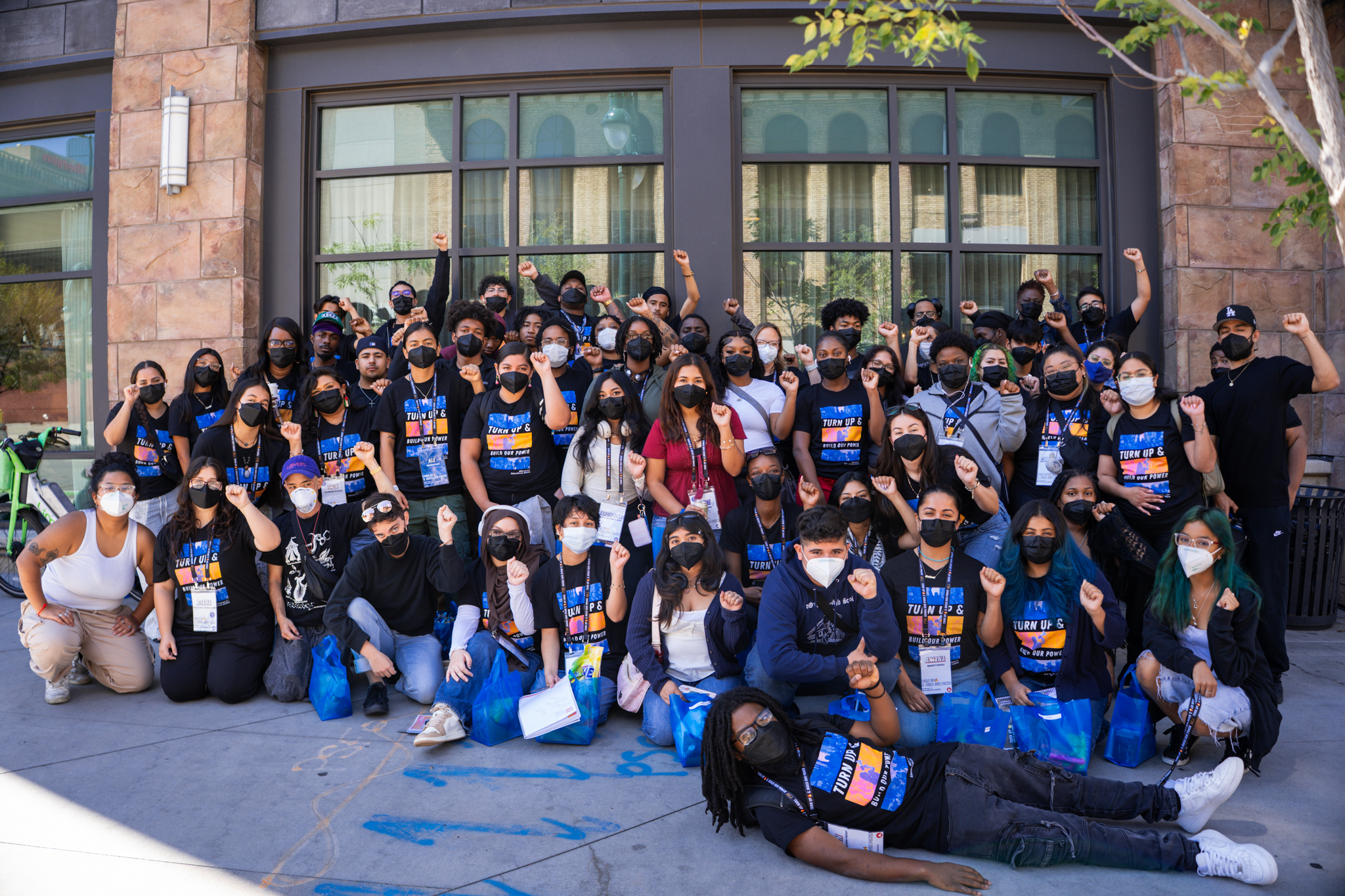
This is a critical moment for schools as public institutions. Schools are a microcosm of our society: the injustices, violence, and inequalities of the broader world often show up inside classrooms, hallways, cafeterias, and playgrounds. But they are also often the first place where young people get to practice a different way of being with one another — where they explore what we should expect from the people and systems around us, and where we experiment with compassion, care, honesty, repair, and collective responsibility.
That opportunity for schools to become citadels of genuine safety, care, and youth leadership, and to disrupt patterns of harm and oppression, is an opportunity worth fighting for. As students take to the streets, they are not only rejecting harm to their family, friends, and neighbors; they are guarding against the ways policing, criminalization, and the playbook of control threatens that future for all of us.
Young people across the country are leading the way. The rest of us need only follow.